Australia July Jobs Report: Unemployment Rises to 4.5%, RBA Rate Hike Pressure Eases – News and Statistics

Australia July Jobs Report: Unemployment Rises to 4.5%, RBA Rate Hike Pressure Eases – News and Statistics

Aug 20, 2026 Australian employment unexpectedly declined in July, pushing the jobless rate to its highest level since late 2021, according to data released on Thursday. The weaker-than-expected report reduced pressure on the central bank to raise interest rates.The Australian Bureau of Statistics reported a net fall of 15,800 jobs in July compared with June, when employment had surged by a revised 80,300. Analysts had forecast an increase of 15,000, but full-time positions did rise by 16,300. The unemployment rate ticked up to 4.5%, above the expected 4.4%, as the participation rate eased to 66.9%. Hours worked dropped 0.6%, while underemployment remained steady at 6.4%.The Reserve Bank of Australia (RBA) has judged that the labour market has softened somewhat, a factor behind its decision to hold the policy rate at 4.35% last week after three hikes this year. Data released on Wednesday showed wages grew at a moderate pace for a fifth consecutive quarter.However, policymakers warned that further tightening cannot be...

Read More
Australia’s Jobs Market Remains Resilient

Australia’s Jobs Market Remains Resilient

The latest jobs data shows Australia's labour market remains resilient in the face of substantial global economic uncertainty.The unemployment rate increased marginally over the month, to 4.5 per cent in July, but remains low by historical standards.Full-time employment rose by 16,300 over the month, with a record 10.2 million Australians in full-time work in July.There are now 111,800 more people in full-time jobs than a year ago and since 2022 employment growth in Australia has outpaced all other major advanced economies.These job figures also comes after ABS data released yesterday showed real wages grew in the June quarter and annual nominal wages have now grown above three per cent for four years under this Labor Government.Quotes Attributable to Amanda Rishworth, Minister for Employment and Workplace Relations:"Australia's labour market continues to demonstrate resilience despite ongoing global economic uncertainty."Under the Albanese Labor Government, we've seen the lowest average unemployment rate of any government in the last 50 years, alongside the creation of...
Read More
ABS July jobs figures: Experts split on rate cut hopes

ABS July jobs figures: Experts split on rate cut hopes

Australia’s unemployment rate surprisingly rose in July, snapping a recent strong run for the jobs market. But experts are divided on what it means for mortgage holders to celebrate. Fresh figures released from the Australian Bureau of Statistics on Thursday showed the jobless rate came in at 4.5 per cent for the month of July, up from 4.4 per cent in June. The number of unemployed rose by 15,800.This followed June’s shock surge in employment, when 76,300 Australians entered the workforce.VanEck head of investments Russel Chesler said it was great news for workers but bad news for anyone thinking the RBA is done hiking this year.“Contrary to the market’s view, we believe this resilience will put more pressure on the RBA to increase rates, and we expect at least another rate hike by year end,” Mr Chesler said.The Reserve Bank runs a dual mandate of price stability and full employment and has previously said it will need the economy to...
Read More
Rise in unemployment shows jobs market softening slowly

Rise in unemployment shows jobs market softening slowly

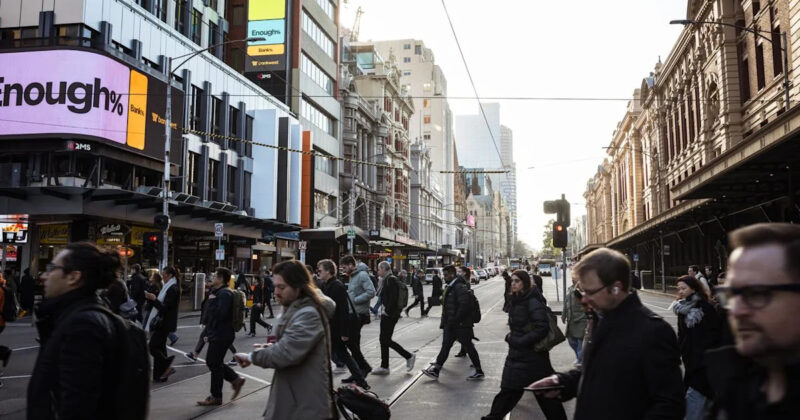
Australia's unemployment rate has climbed to 4.5 per cent, adding to the case for the Reserve Bank to hold off on hiking interest rates again. The result was driven by a fall in jobs of 15,800, well below consensus forecasts for a rise in employment of 12,000. While the labour force figures for July - released by the Australian Bureau of Statistics on Thursday - were softer than economists anticipated, the result was not as dire as the headline numbers suggest. Employment figures are volatile and the fall followed a jump of 80,000 jobs in June.  Employment fell by 15,800 in July, pointing to a slowing in the Australian economy. (Joel Carrett/AAP PHOTOS) Although most economists had...
Read More
Australian Dollar: Softer jobs data keeps RBA sidelined – BBH

Australian Dollar: Softer jobs data keeps RBA sidelined – BBH

Brown Brothers Harriman’s (BBH) Elias Haddad notes AUD/USD is holding gains on broad US Dollar weakness despite a soft July Australian labor report. The economy unexpectedly lost jobs, with rising unemployment and falling hours worked pointing to weaker labor demand. Haddad argues easing labor conditions support the Reserve Bank of Australia staying on hold, though attractive carry and commodity exposure remain key Australian Dollar tailwinds.Weak labor data, supportive AUD carry"AUD/USD is holding on to yesterday’s gains triggered by broad USD weakness. Australia’s July labor force report was soft. The economy unexpectedly lost -15.8k jobs in July (consensus: +12k) vs. +80.2k in June, driven by lower part-time employment (-32.2k vs. +31.4k in June).""Encouragingly, full-time employment rose 16.3k in July and the previous month’s gain was revised 20k higher to +48.9k.""More concerning, the unemployment rate rose 0.1ppt to 4.5% (consensus: 4.4%) despite a lower participation, while hours worked fell -0.6% m/m. This suggests weakness in labor demand rather than an increase in...
Read More
Australian Dollar retreats on weak jobs, softer US Dollar limits fall

Australian Dollar retreats on weak jobs, softer US Dollar limits fall

AUD/USD declines 0.22% on Thursday and trades around 0.7110 at the time of writing. The Australian Dollar (AUD) remains under pressure after data showed an unexpected deterioration in Australia’s labor market in July, although persistent weakness in the US Dollar (USD) is helping to limit the pair’s losses.The Australian Bureau of Statistics (ABS) reported that the Australian economy lost 15.8K jobs in July, while markets had expected an increase of 15K. Australia’s Unemployment Rate rose to 4.5% in July, from 4.4% in June and above market expectations for an unchanged reading of 4.4%. The weaker-than-expected figures ease expectations that the Reserve Bank of Australia (RBA) may need to raise interest rates further to combat inflationary pressures. This outlook contrasts with comments from RBA Deputy Governor Andrew Hauser, who warned on Wednesday that inflation risks remain tilted to the upside and that tighter monetary policy could be necessary to bring inflation under control.BBH’s Elias Haddad argues that “the continued easing in labor...
Read More
Australian Dollar Softens as Softer Jobs Data Reinforces RBA Patience | Forex News Monetary Policy

Australian Dollar Softens as Softer Jobs Data Reinforces RBA Patience | Forex News Monetary Policy

BitcoinWorldAustralian Dollar Softens as Softer Jobs Data Reinforces RBA Patience The Australian Dollar traded softer on Thursday after the release of weaker-than-expected employment data, reinforcing expectations that the Reserve Bank of Australia (RBA) will keep interest rates on hold for an extended period, according to analysts at Brown Brothers Harriman (BBH). What the Jobs Report Showed Australia’s labor market added fewer jobs than forecast in the latest monthly report, while the unemployment rate ticked higher, signaling a loss of momentum in the economy. The data, released by the Australian Bureau of Statistics, showed that the economy added 15,000 jobs in [Month Year], below the 25,000 expected, and the unemployment rate rose to 4.1% from 4.0%. The softness in the labor market is a key indicator for the RBA, which has maintained a cautious stance on monetary policy, balancing inflation concerns against slowing growth. The central bank has kept the cash rate steady at 4.35% since November 2023, and the latest data is likely to...
Read More
‘We’ve had enough, we’re going to walk’: 60 years on from Vincent Lingiari’s Wave Hill protest

‘We’ve had enough, we’re going to walk’: 60 years on from Vincent Lingiari’s Wave Hill protest

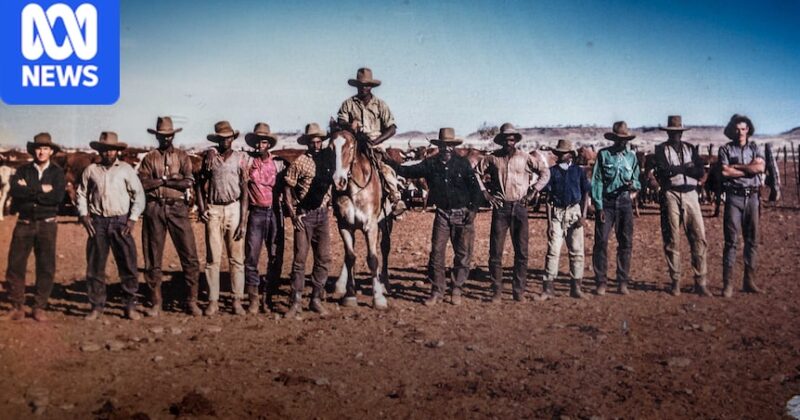
To Kalkarindji Gurindji traditional owner and elder Rob Roy, the Wave Hill Walk-Off is one of the most important turning points in Australian history, which ultimately returned his land, and more than half of the Northern Territory, to Aboriginal people.Aboriginal and Torres Strait Islander readers are advised that this article contains the names and images of Indigenous people who have died."It's such a historic event because it changed Australia in regard to fair wages — it was one of those pivotal moments," Mr Roy said."Vincent Lingiari fought against all the odds, and so his legacy will remain hundreds of years from now; he literally changed the whole nation of Australia."Rob Roy says the Wave Hill Walk-Off changed Australia. (ABC News: Michael Donnelly)This weekend, hundreds of people will converge on the remote community of Kalkarindji to celebrate the 60th anniversary of Gurindji leader Vincent Lingiari leading 200 Indigenous cattlemen and domestic servants off the station, in strike action over their employer...
Read More