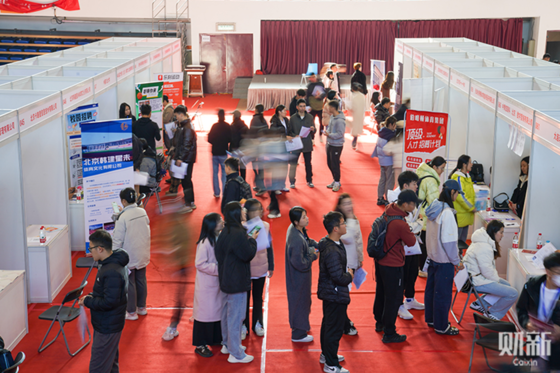
A Western degree, particularly from the United States, was once highly valued by Chinese students as a reliable path to rapid professional advancement. However, this perception is being challenged as stricter U.S. visa regulations and an increasingly saturated job market in China force many to reconsider the tangible benefits and return on investment of studying abroad[para. 1]. The experience of Chen Qi, a Chinese graduate who was unable to secure stable employment in the U.S. despite promises of a work visa and ultimately returned to China, exemplifies a shift faced by many Chinese students today[para. 2][para. 3].
The declining value of a foreign education is linked to several concurrent trends. First, U.S. job prospects for international graduates have worsened due to ongoing geopolitical tensions, mass layoffs, especially in traditionally hiring sectors like technology and finance, and the fallout of policies such as Donald Trump’s “Buy American, Hire American” agenda, which increased hurdles and raised the cost for employers to hire international staff[para. 4][para. 7]. As an example, new hires by large U.S. tech firms dropped by 25% in 2024 compared to the previous year and declined by more than 50% since pre-pandemic levels, while startups cut graduate hiring by 11%[para. 6]. Meanwhile, the H-1B visa process has grown more unpredictable: 120,000 applicants were selected for 2026, down from 188,000 in 2024, as the number of applications plummeted by over half in the same timeframe[para. 7].
Consequently, employer attitudes in the U.S. have shifted, with local hiring now favored over sponsoring foreign workers due to bureaucratic and financial burdens[para. 8]. As a result, many Chinese graduates are returning to China, joining a surge that saw over one million returnees in 2021—a 35% year-on-year increase—and entering a local job market already accommodating more than 10 million domestic graduates annually amid economic headwinds[para. 9].
The competitive edge that Chinese graduates with Western degrees once held has significantly eroded. The so-called “halo effect” of foreign credentials has faded, and the market premium associated with overseas education has dissolved as more returnees flood the workforce[para. 10][para. 11]. The rise of Chinese tech leaders has shifted demand toward domestically-trained talent attuned to the local market, a realm where returning graduates often lack experience[para. 11]. Interest in foreign companies and positions designated for overseas graduates has declined, as evidenced by recruitment data since 2019[para. 12].
Some local governments restrict civil service opportunities for returnees, in some cases limiting eligibility to alumni of only elite foreign universities[para. 13]. Salary data from Liepin highlights the squeeze: average annual earnings for returnees fell from 268,200 yuan (about $37,300) in 2020 to 204,500 yuan in early 2023[para. 14]. Hiring managers now prize practical skills and dedication over international credentials.
Notably, while there is still wage growth in fast-developing strategic sectors—like renewable energy and semiconductors—competition is fierce, and demand is focused on top-tier talent[para. 15][para. 16]. For most returnees, innovations in fields such as technology, pharmaceuticals, and clean energy offer new opportunities but also come with higher entry barriers[para. 17].
Ultimately, what was once a clear and lucrative path has become more uncertain. Many returnees, like Chen, now place greater value on life experience and personal growth over straightforward economic returns, reflecting broader changes in the global educational and employment landscape[para. 18].
AI generated, for reference only